UAE-Pakistan Relations: A Decades-Old Partnership Rooted in Mutual Support, Economic Interdependence, and Strategic Ties Since the UAE’s Founding
As an expatriate living in UAE for almost 20 years; I found it incumbent upon myself that I will try to summarize UAE-Pakistan relationship since the beginning. The agenda is simple which is to put things in perspective and to remind how this relationship has evolved across many decades and should not be ignored.
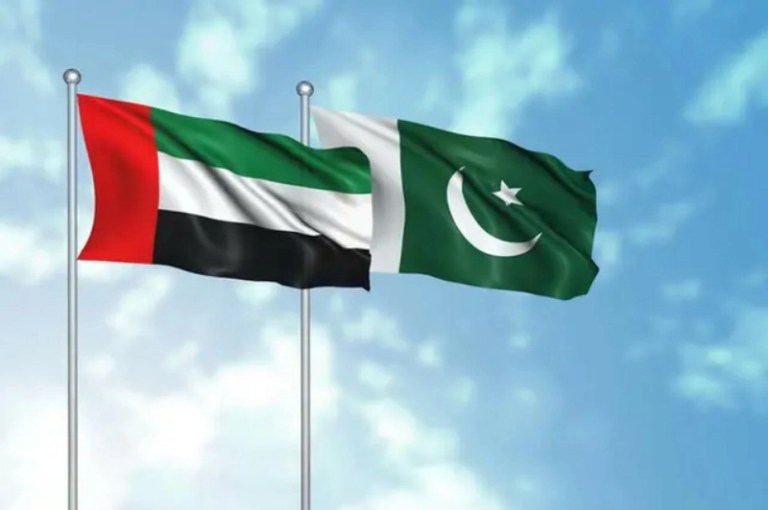
The United Arab Emirates (UAE) and Pakistan share one of the longest-running strategic partnerships in the region, dating back to the UAE’s formation in December 1971. Pakistan was the first country to recognize the newly unified Emirates, a gesture of early solidarity amid the post-colonial reconfiguration of the Gulf states. This bond—spanning political recognition, economic interdependence, humanitarian aid, and people-to-people links—has evolved from foundational military and diplomatic cooperation into a multifaceted alliance. It reflects shared Islamic values, trade potential, and Pakistan’s reliance on Gulf capital and labour alongside the UAE’s interest in South Asian markets.
Historical Foundations (1971–1990s): Early Recognition and Mutual Assistance
Bilateral ties trace directly to 1971, when the UAE’s founding father, Sheikh Zayed bin Sultan Al Nahyan, viewed Pakistan as a second home. High-level visits and defense cooperation began soon after: Pakistani experts trained UAE forces as early as 1968, and the first five Chiefs of the UAE Air Force were Pakistani officers. Pakistan International Airlines (PIA) provided crucial technical and administrative support to the nascent Emirates airline in 1985, helping establish it as a global carrier and opening Karachi as its first international route.
Financial support flowed in both directions from the outset. During Pakistan’s economic challenges in the 1970s and 1980s (amid oil shocks and nationalization policies), the UAE and other Gulf states provided deferred oil financing and deposits to bolster Pakistan’s reserves. By the 1990s, a notable $450 million one-year loan was extended, later repaid after nearly three decades. These early flows—often in the form of short-term deposits or rollovers—helped stabilize Pakistan’s balance of payments without heavy conditionality, setting a pattern of pragmatic, interest-free or low-interest assistance.
2000s–2010s: Economic Growth, Investment Surge, and Major Aid Initiatives
The relationship deepened with liberalization. Pakistan’s privatization and China-Pakistan Economic Corridor (CPEC) era opened doors for Gulf capital. The UAE became Pakistan’s top investment partner regionally (fifth globally), with public and private sector commitments exceeding $10–20 billion over two decades in sectors like energy, real estate, telecommunications (Etisalat), ports (DP World), and banking. Pakistani outward FDI in the UAE reached significant levels, primarily in real estate, finance, and construction.
Trade expanded rapidly: From roughly $9 billion in 2014, bilateral trade hit $8–10 billion annually in the late 2010s and early 2020s. Pakistan exports textiles, rice, and leather to the UAE; the UAE supplies petroleum, machinery, and re-exports. Remittances from Pakistani expatriates (now ~1.8 million in the UAE) provided a steady $4–7 billion annually, second only to Saudi Arabia and critical for Pakistan’s foreign reserves and poverty alleviation.
Humanitarian support was transformative. The 2010 floods devastated Pakistan; the UAE launched the UAE Pakistan Assistance Program (UAE-PAP) in January 2011 under Sheikh Khalifa bin Zayed Al Nahyan, channeling $450 million (with $200 million added in 2018) across health, education, infrastructure, water, and livelihood projects. Initiatives included bridges, schools, hospitals, and medical complexes (e.g., Sheikh Zayed Medical Complex in Lahore). Polio eradication campaigns delivered vaccines to 71 million children. Institutions and projects across Swat, Khyber Pakhtunkhwa, and beyond were named after Sheikh Zayed.
In December 2019, the UAE deposited $3 billion in the State Bank of Pakistan to support liquidity and reserves during economic strain.
2020s: Financial Lifelines Amid Crises and Trade Expansion
The COVID-19 pandemic tested ties, but the UAE provided testing, repatriation support, and aid. The 2022–2023 floods and ongoing economic pressures prompted further assistance. The UAE pledged $3 billion in cash plus $3.2 billion in deferred oil supply in 2019 (announced via Crown Prince discussions), followed by a $1 billion loan in January 2023 and additional rollovers. UAE investment agreements, including potential $25 billion in energy, ports, and logistics Memorandum of Understanding, continued.
Trade volumes stabilized around $8–10 billion, with non-oil trade growing 30% in 2022. Pakistan’s exports to the UAE reached $1.52 billion in 2022.
Pakistani expatriates has maintained a presence in UAE real estate, finance, and services, with outward FDI notable in certain sectors. However, Pakistan’s core economic outflows have been to China and others; UAE-Pakistan investment remains balanced with UAE inflows dominating Pakistan’s growth story.
Pakistan continues as a vital labour and remittance source for the UAE. High-level engagements (e.g., commerce ministers) and agreements on securities, energy, and trade promotion underscore long-term optimism.
Pakistan’s Remittances from UAE Workers vs. Total Inflows and Foreign Exchange Reserves (2010–2025): A Decade of Growth Amid Volatility
Pakistan’s economy has long relied on workers’ remittances as a vital source of foreign exchange, poverty alleviation, and balance-of-payments support. Workers employed in the UAE (the second-largest source after Saudi Arabia) form a critical component, with inflows often comprising 15–20% of the total. These flows have surged in the 2020s due to formalization of channels, government incentives, and Gulf labour demand. At the same time, Pakistan’s foreign exchange reserves have fluctuated sharply plunging during crises but rebounding sharply with remittance inflows.
Data reflects SBP-reported inflows (formal channels dominant post-2020; includes some non-workers transfers but primarily migrant workers). Figures show strong post-COVID recovery and a record surge in FY25 (2025).
UAE inflows are the second-largest contributor (typically 18–20% of total). Numbers rose notably from FY23–FY24 due to formal channel incentives despite a drop in registered UAE workers (from ~230,000 to ~64,000 in 2024). Exact breakdowns are SBP country-wise (not always public in annual aggregates pre-2025), but consistent figures from IOM/SBP reports:
UAE share dipped slightly in 2024 due to fewer registered workers, but absolute amounts remained strong thanks to formalization. Earlier years (2010–2022) averaged ~$4.5–5 bn annually, stable but lower than the recent surge. Saudi Arabia consistently leads (25%+ share).
UAE Share of Total Remittances (2010–2025)
• 2010–2020: Roughly 18–22% (stable, reflecting ~1.8–2 million Pakistani workers in the UAE).
• 2021–2024: Peaked at ~23.5% in 2023, then 18.7% in 2024 (lower worker numbers offset by formal inflows).
• 2025: ~20.4% (7.83 bn out of 38.3 bn total).
UAE remittances have consistently buffered Pakistan’s forex needs but remain more volatile than Saudi inflows due to policy shifts in the UAE. Remittances from Pakistan’s expatriates’ workers provided 10-20% of the inflows in many years stabilizing Pakistan’s reserves during many crises faced by Pakistan in the last few decades.
A Model of Pragmatic Cooperation
The UAE-Pakistan partnership exemplifies pragmatic, interest-driven solidarity rather than donor-recipient charity. UAE support (deposits, loans, infrastructure) has been cyclical—deployed during Pakistan’s balance-of-payments crises (1970s, 1998 nuclear tests aftermath, 2010 floods, 2022–2023 IMF-era strains) and repaid when conditions eased, or geopolitics shifted. This pattern stabilized Pakistan’s reserves and growth without IMF-style conditionality, contrasting with more transactional Gulf aid.
Pakistan’s role as a stable labour market and investment partner (real estate, aviation, ports) provides the UAE with demographic dividends and diversification. Remittances and trade create mutual economic buffers—Pakistan gains foreign exchange; the UAE secures markets and talent.
The economic and geopolitical uncertainty would need further cooperation between both brotherly nations more than before in my opinion as dynamics as they evolve presents a new opportunity to develop a deepened strategic partnership between both countries, its government and people.
Overall, this is a win-win model of South-South cooperation in a multipolar world. From 1971’s symbolic first recognition to 2026’s repaid but resilient ties, the partnership has repeatedly proven adaptive. Sustained focus on trade facilitation, people-to-people bonds, and balanced investment—while navigating geopolitical nuances—could elevate it to a transformative engine for both nations’ prosperity. As leaders like Sheikh Zayed envisioned, this alliance embodies tolerance, innovation, and enduring friendship that benefits millions on both sides.
There is much more deep bonding between both the countries. Pakistan can benefit a lot from the technological lead which UAE presents with its ever-expanding vision in technology and associated fields. At the same time Pakistan’s qualified labour market which has over the years played a key role as being part of building the great nation which is UAE can benefit the growth plans further.
As I sign off this article or must say summary of the collaboration of both brotherly nations in the last many decades. I hope; this reminds the unbroken bond which exist between both the countries and hoping that this would only be expanded further. I am sure I may have missed some key contributions like investments in other sectors of Pakistan to support its economy and its people, but I must say as I conclude that this would not be enough to document all of it here and I am sure that there is more to come.
 Posted by


Well written Danish Bhai.
LikeLike